

SwiftUI Previews Are About to Get a Lot More Useful — Here’s What We’re Seeing
Published March 31, 2026 · Jordan Kim
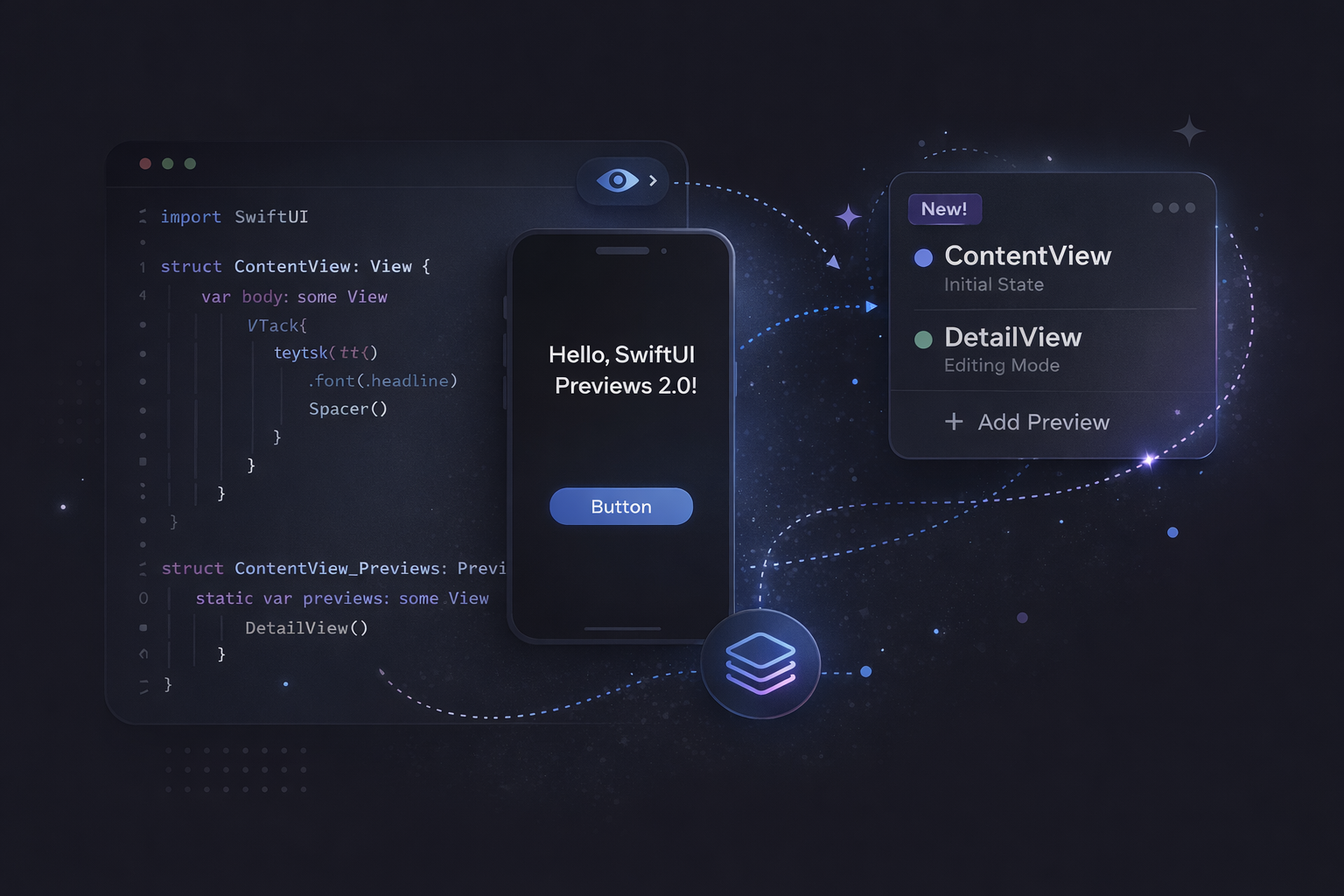
SwiftUI previews are already one of the most powerful parts of the framework — but they still feel a bit more like a developer tool than a true collaboration surface. Recently, though, there have been some small signals that suggest Apple might be thinking bigger about what previews could become.
TL;DR
- SwiftUI previews are evolving from static snapshots into more dynamic, state-driven environments
- There are hints Apple may be exploring ways to make previews more shareable and interactive
- Better preview tooling could reduce friction between design, product, and engineering
- If expanded, previews could become a central part of how teams build and review UI
Previews Are Already More Powerful Than They Look
Even today, SwiftUI previews support a lot more than just rendering a single static view. You can define multiple states, simulate environments, and quickly iterate on UI without running the full app.
#Preview {
    ContentView()
}

#Preview("Loading State") {
    ContentView(state: .loading)
}

#Preview("Error State") {
    ContentView(state: .error)
}
That alone has changed how many teams approach UI development. But previews are still mostly confined to Xcode, and that’s where things start to feel limiting.
The Collaboration Gap
One of the biggest friction points today is that previews are difficult to share outside of the development environment. Designers, product managers, and stakeholders usually rely on screenshots, recordings, or separate prototype tools.
That creates a disconnect between what developers see in Xcode and what the rest of the team interacts with. It also slows down feedback loops, especially when UI is still in flux.
What If Previews Were More Portable?
This is where things get interesting. If SwiftUI previews were able to run outside of Xcode — even in a limited form — they could become a much more powerful collaboration tool.
Imagine being able to:
- share a live preview link with a designer or PM
- interact with different UI states directly in a browser
- validate edge cases without building and running the full app
- review UI changes in pull requests using real components instead of screenshots
Early Signals in the Ecosystem
While nothing official has been announced, there are a few patterns that make this direction feel more plausible:
- increased emphasis on previews in Apple’s tooling and sessions
- more flexible state-driven preview APIs
- growing interest in faster UI feedback loops across teams
- broader conversations around sharing UI outside of native apps
None of this confirms a specific feature, but it does suggest that previews are becoming more central to the SwiftUI story.
What the API Might Look Like
If Apple were to expand previews beyond Xcode, it would likely build on the existing #Preview system rather than introducing something entirely new.
#Preview(platform: .web) {
    CheckoutView(order: sampleOrder)
}
Or even:
#Preview(sharing: .link) {
    ProfileView(user: previewUser)
}
These don’t exist today, but they show how Apple could extend previews in a way that feels consistent with the current model.
Why This Would Matter for Teams
If previews became more interactive and shareable, they could reshape how teams collaborate around UI:
- design reviews could happen directly on real components
- product feedback could come earlier in the development cycle
- engineers could validate UI states without context switching
- design systems could evolve faster with tighter feedback loops
In other words, previews would stop being just a developer convenience and start becoming a shared surface across the entire team.
How This Connects to Bigger Trends
This idea also lines up with a broader shift toward faster iteration and tighter alignment between design and implementation. If SwiftUI is moving toward more semantic, system-driven UI, it makes sense for previews to become more central and more accessible.
It also overlaps with other ideas developers have been speculating about — including SwiftUI rendering beyond native apps. Even a small step in that direction would unlock a lot of new workflows.
Final Thoughts
SwiftUI previews are already one of the best parts of the framework. But they still feel like they’re only being used for a fraction of what they could be.
If Apple expands previews into something more interactive and shareable, it wouldn’t just be a nice improvement — it could fundamentally change how teams build and review UI.
And based on where things are heading, that kind of shift doesn’t feel nearly as far off as it once did.